The claim that white German Shepherds have different temperament from their pigmented counterparts is one that I have tracked through twenty-five years of canine genetics research without finding a single piece of supporting evidence. I have found the claim repeated in breed club literature, heard it from show judges, and seen it cited in academic contexts without citations. But I have never found the primary data that would support it.
What I have found instead is behavioral genetics research that clearly explains how temperament is determined, why coat color is irrelevant to that determination, and what actually produces the temperament differences seen between and within dog breeds.
How Temperament Is Genetically Determined
Temperament in dogs, as in all mammals, reflects the combined action of hundreds to thousands of genes affecting neurodevelopment, neurotransmitter synthesis and signaling, stress response systems, sensory processing, and learning capacity. No single gene determines whether a dog is bold or fearful, reactive or stable, sociable or aloof.
The genes relevant to temperament are distributed across the entire genome. They are located on many chromosomes and regulate many different biological processes. Some affect serotonin transporter function. Others influence cortisol response patterns. Still others affect the density and distribution of receptor types in specific brain regions.
The MC1R gene on chromosome 5, which determines whether German Shepherds have white or pigmented coats as I explain in the genetics of white coat color, does one thing: it controls whether the MC1R receptor can respond to alpha-melanocyte stimulating hormone in melanocytes. That is its function. Its expression is primarily in melanocytes and has no documented role in neural tissue development, neurotransmitter systems, or any of the biological pathways that influence behavior.
The claim that e/e genotype affects temperament would require MC1R to have a function in brain or behavioral development that has not been identified in any research examining this gene. MC1R is one of the most thoroughly studied genes in mammalian biology, with detailed research in mice, humans, and multiple domestic species. No neurological or behavioral function has been identified.
The History of the Temperament Claim
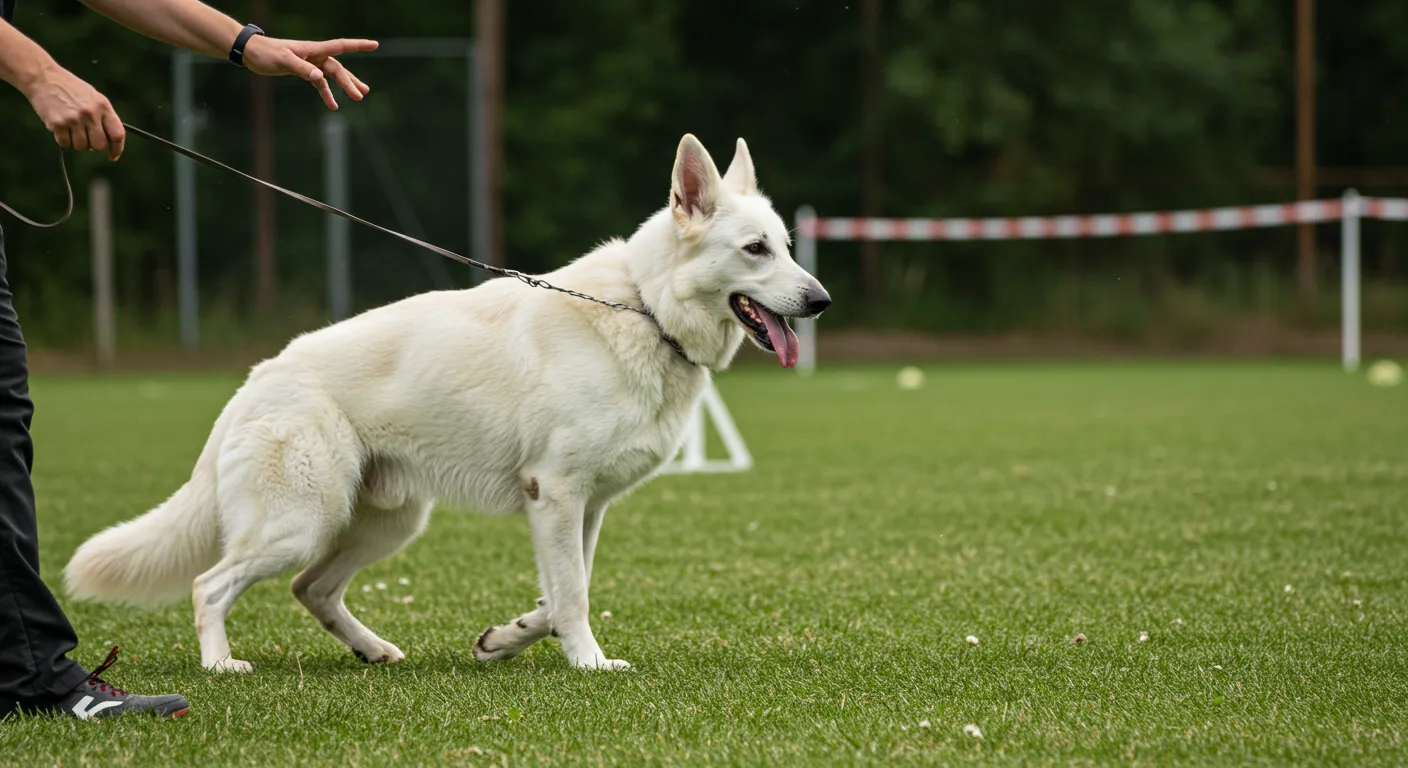
Understanding where the temperament claim came from is instructive. It did not arise from behavioral research. It arose from breed politics.
When white German Shepherds were being excluded from registries and breed standards in the early to mid-twentieth century, as I document in my article on the history of white shepherd recognition, proponents of exclusion needed justifications beyond aesthetic preference. Health and temperament concerns were recruited as scientifically-sounding rationales for decisions that had already been made on other grounds.
This is a well-documented pattern in the history of science: a desired conclusion motivates a search for supporting evidence rather than the other way around. The temperament concern was asserted, and any anecdotal observation of an anxious or unstable white shepherd was interpreted as confirmation while the many stable, confident white shepherds were ignored.
The circularity is obvious in retrospect. If you define white shepherds as temperamentally unstable and use that definition to exclude them from testing environments and breeding programs, the remaining visible population may skew toward dogs from less rigorous breeding programs. When those dogs show variable temperament, you cite it as evidence for your original claim. The methodology is not science.
Behavioral Genetics Research
Actual behavioral genetics research in dogs consistently finds that temperament traits are highly heritable but distributed across many loci with no single major gene effect. GWAS studies examining fear, aggression, trainability, sociability, and related traits identify dozens of suggestive genomic regions, none of which overlap with the Extension locus.
A 2020 study examining thousands of dogs across breeds found that breed accounts for a significant portion of behavioral variance, but that individual variation within breeds is substantial and that shared genomic ancestry rather than specific coat color variants drives breed-level behavioral tendencies. White shepherds share their genomic ancestry with German Shepherds except at a few loci including the Extension locus. Their behavioral genetics is therefore equivalent.
Swedish behavioral research on dog mentality assessment, which provides standardized temperament evaluation across breeds, has included German Shepherds and white shepherds in comparative analyses. The distribution of scores for traits like curiosity, playfulness, chase drive, and reactivity does not show systematic differences between white and pigmented shepherd populations.
What Actually Determines Temperament in Individual Dogs
The behavioral genetics framework explains breed-level tendencies, but breeders and owners experience temperament at the individual level. At that level, several factors matter enormously.
Parental temperament: The most reliable predictor of a puppy’s adult temperament is the temperament of its parents. This reflects both the genetic contribution of the parents and the early developmental environment the dam provides. Breeders who select consistently for stable, confident temperament produce puppies with better behavioral outcomes regardless of coat color.
Early socialization: The developmental period from approximately three to twelve weeks is critical for social learning in dogs. Puppies exposed to diverse people, environments, sounds, and experiences during this period develop better coping capacities as adults. Undersocialized puppies of any breed and color show more fearful and reactive behavior.
Training and management: Behavioral outcomes are shaped by learning history throughout a dog’s life. Aversive training methods, social isolation, and inadequate mental stimulation produce poor behavioral outcomes in any dog. Positive reinforcement-based training and appropriate enrichment support the expression of confident temperament.
Individual variation: Within any breeding, individual differences in temperament emerge from the specific combination of genes each puppy inherits and from developmental factors not controlled by breeders. The same parents producing the same coat colors can produce puppies with varying behavioral profiles.
The documented success of white shepherds in working roles demonstrates all of these factors in action. Working white shepherds come from breeders who selected for working temperament, socialized puppies appropriately for demanding roles, and trained them using effective methods. Their performance reflects those inputs, not their coat color.
The Berger Blanc Suisse Temperament Standard
The Berger Blanc Suisse breed standard is explicit about temperament requirements: confident, attentive, willing to work, and stable in novel situations. Dogs that show excessive fearfulness, inappropriate aggression, or lack of social confidence are explicitly excluded from meeting breed standard.
This formalized temperament standard, embedded in the official breed description, represents the breed community’s commitment to documenting what should have been obvious from the genetics: white shepherds can and should have excellent temperament, and breeders are responsible for selecting toward that standard rather than accepting poor temperament as an expected characteristic.
Breed clubs that test temperament systematically through standardized assessments provide data on how the Berger Blanc Suisse population actually performs. The results of these tests, available through national breed clubs in Switzerland, Germany, France, and elsewhere, show that well-bred Berger Blanc Suisse achieve competitive scores on behavioral assessments that parallel or exceed what pigmented German Shepherds show.
Advice for Breeders
My practical advice for breeders concerned about temperament is the same advice I would give for any breed concern: look at the evidence, test your dogs, and select based on outcomes rather than assumptions.
Evaluate temperament systematically in your breeding stock. Standardized assessments like the BH (Companion Dog Test) or breed-specific temperament tests provide objective data rather than subjective impressions. Dogs that pass rigorous behavioral evaluations are demonstrably more suitable for breeding than dogs that have never been tested.
Select sires and dams with documented stable temperament and working history. The genetic contribution from working, tested parents is the strongest genetic investment a breeder can make in future generations’ behavioral quality.
Socialize puppies comprehensively. The environmental contribution to temperament is substantial. Provide the developmental experiences that allow genetic potential to express fully.
And reject the myth that white coat predicts anything about behavior. The genetics are clear. The MC1R gene affects melanocytes. Everything else about your white shepherd, including its temperament, its structure, its working ability, and its health, is determined by the rest of its genome, which it shares in common with its pigmented German Shepherd relatives.